Open For Submissions
The Helena Whitehill Book Award
August 15th - October 31st
Submit a previously unpublished, full or chapbook-length manuscript.
We are seeking manuscripts of poetry and creative nonfiction, including memoirs, essays, and hybrid works!
Selected manuscripts will receive publication by Tupelo Press, a $1,000 advance, a book launch, and national distribution with energetic publicity and promotion.




New & Forthcoming
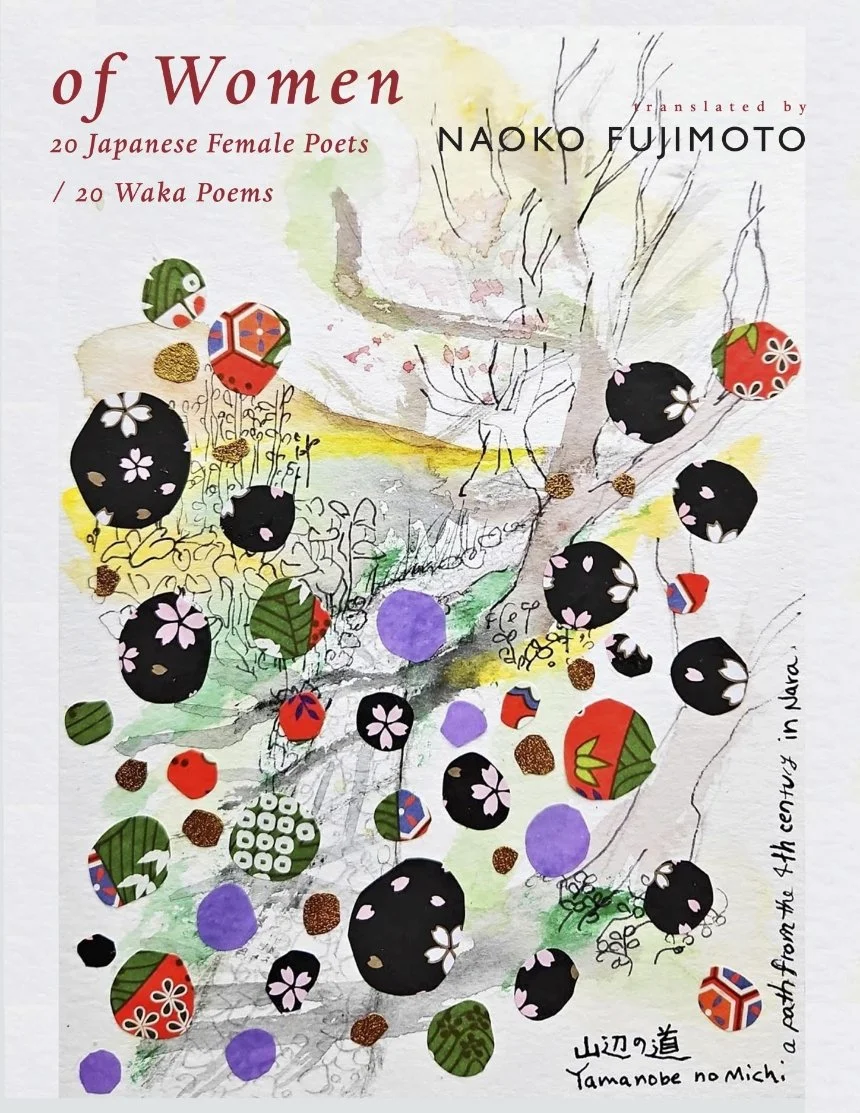
Edited by Naoko Fujimoto
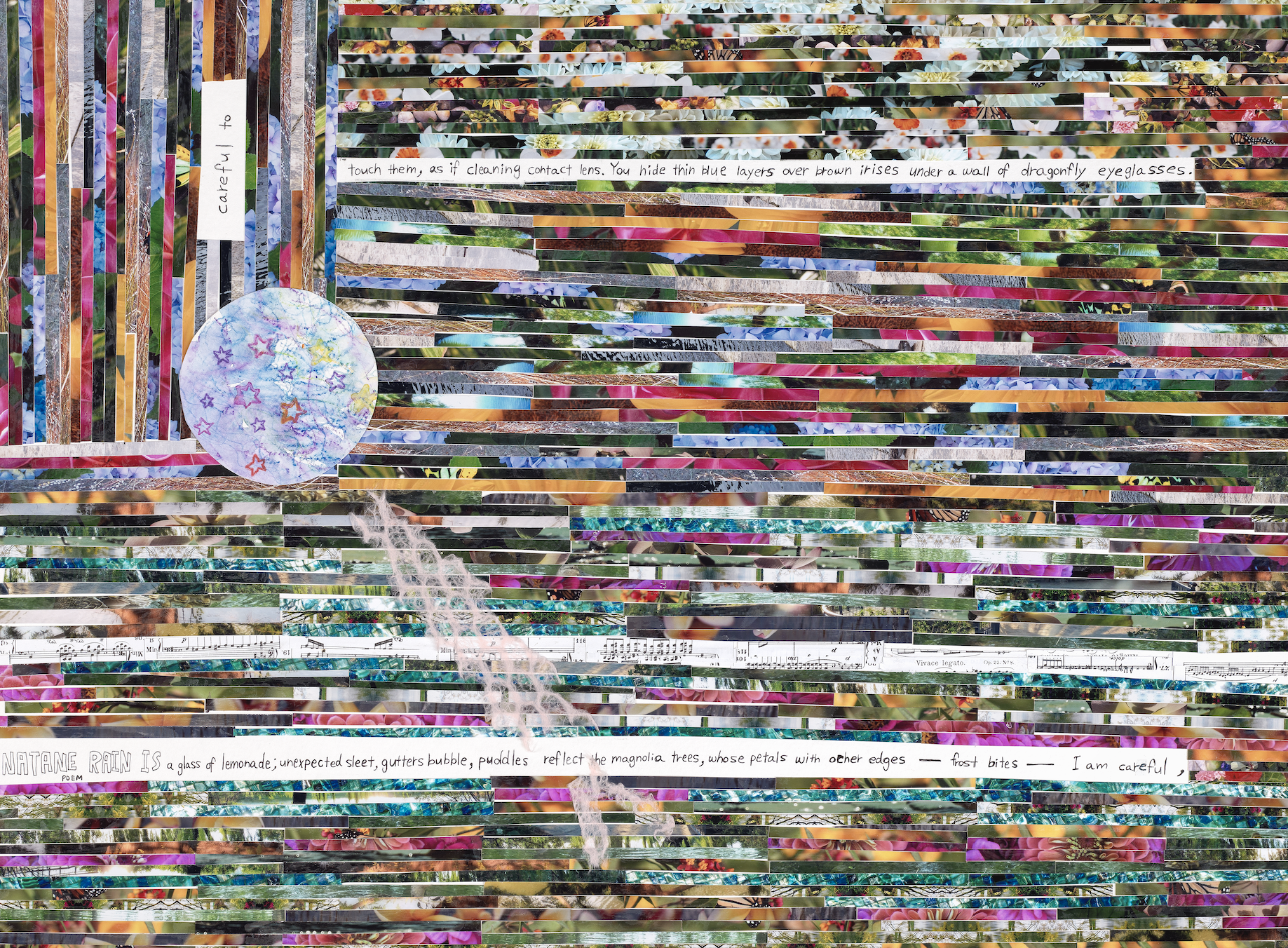
A collection of translated Japanese waka-poems, including text collage and haibun-style discourses on translation.
Of Women is a collection of translations of Japanese waka-poems from the seventh century to the twelfth century, featuring twenty female poets from this period, when Japanese women’s literature flourished. This book includes poems by famous writers from the era, such as Sei Shonagon (The Pillow Book) and Murasaki Shikibu (The Tale of Genji), and introduces some lesser-known female poets as well.
Waka compacts much information in a short form: words with double meanings, unfamiliar phrases, habits foreign to non-Japanese speakers, and hidden historical backgrounds. Direct translations would fail to capture the author’s full intent, so Of Women takes several approaches to capture the original sensory images, including text collage and haibun, short essays that provide historical context and introduce the author before each waka.
Naoko Fujimoto
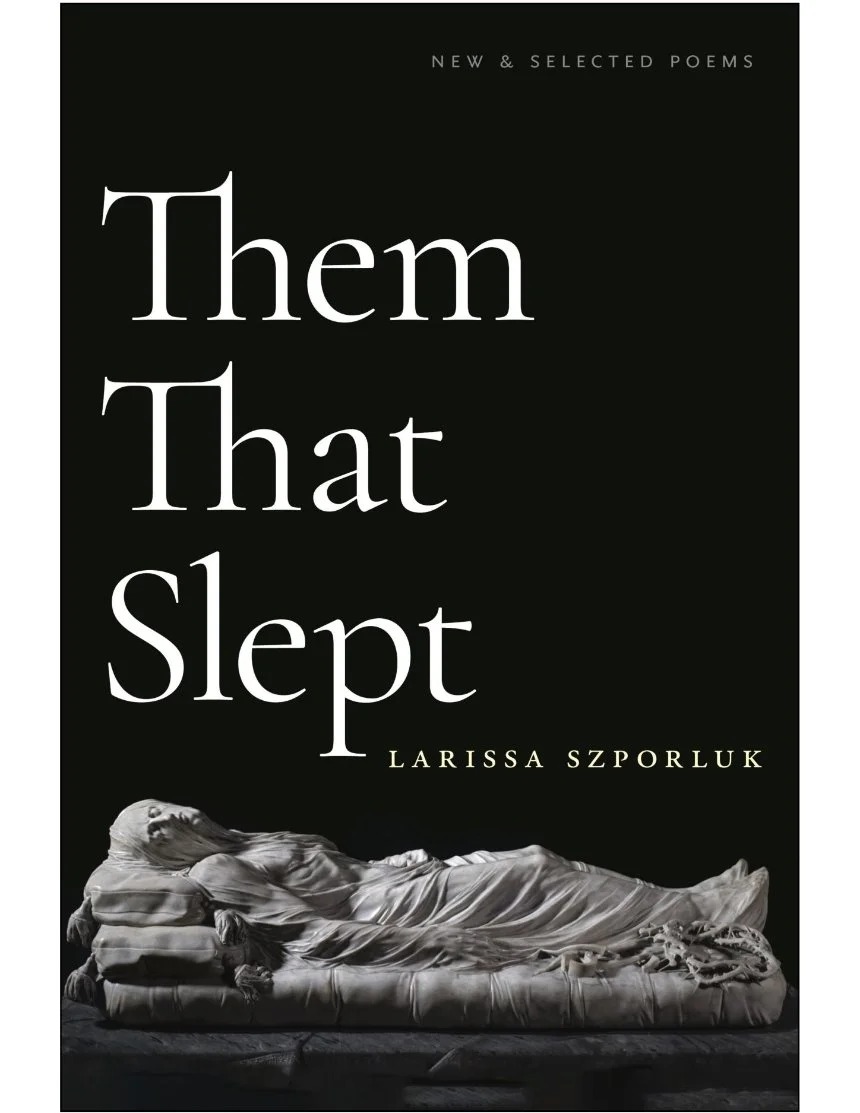
by Larissa Szporluk
A selection of poems that form a narrative about psychological and spiritual somnambulance in our current age and the ever-urgent need to wake up.
In Them That Slept, Larissa Szporluk gathers three decades of work into a single incandescent arc—poems that braid feminist theology, eros, and myth into a lyric of fierce awakening. Borrowing its title from First Corinthians—“the firstfruits of them that slept”—this collection asks what it means to rise, not into certainty, but into desire, voice, and embodiment. Here, virgins become saints and saints become women of appetite. Daughters speak back to fathers. The sea mothers and devours. Joan of Arc lingers in her cell. Venus tweets. The body is never merely symbolic—it is radiant, wounded, knowing. Szporluk’s women are not passive figures in inherited narratives; they are theologians of touch, architects of longing, midwives of their own transformations.
Across selections from six previous books and a powerful suite of new poems, Szporluk reimagines sacred language as intimate speech. Biblical cadences shimmer against domestic interiors, fields, bedrooms, and storm skies. Eros is not an ornament but a form of knowledge; faith is not obedience but risk. These are poems that refuse to sleep through history. They burn toward revelation— sensual, subversive, and alive.
Larissa Szporluk
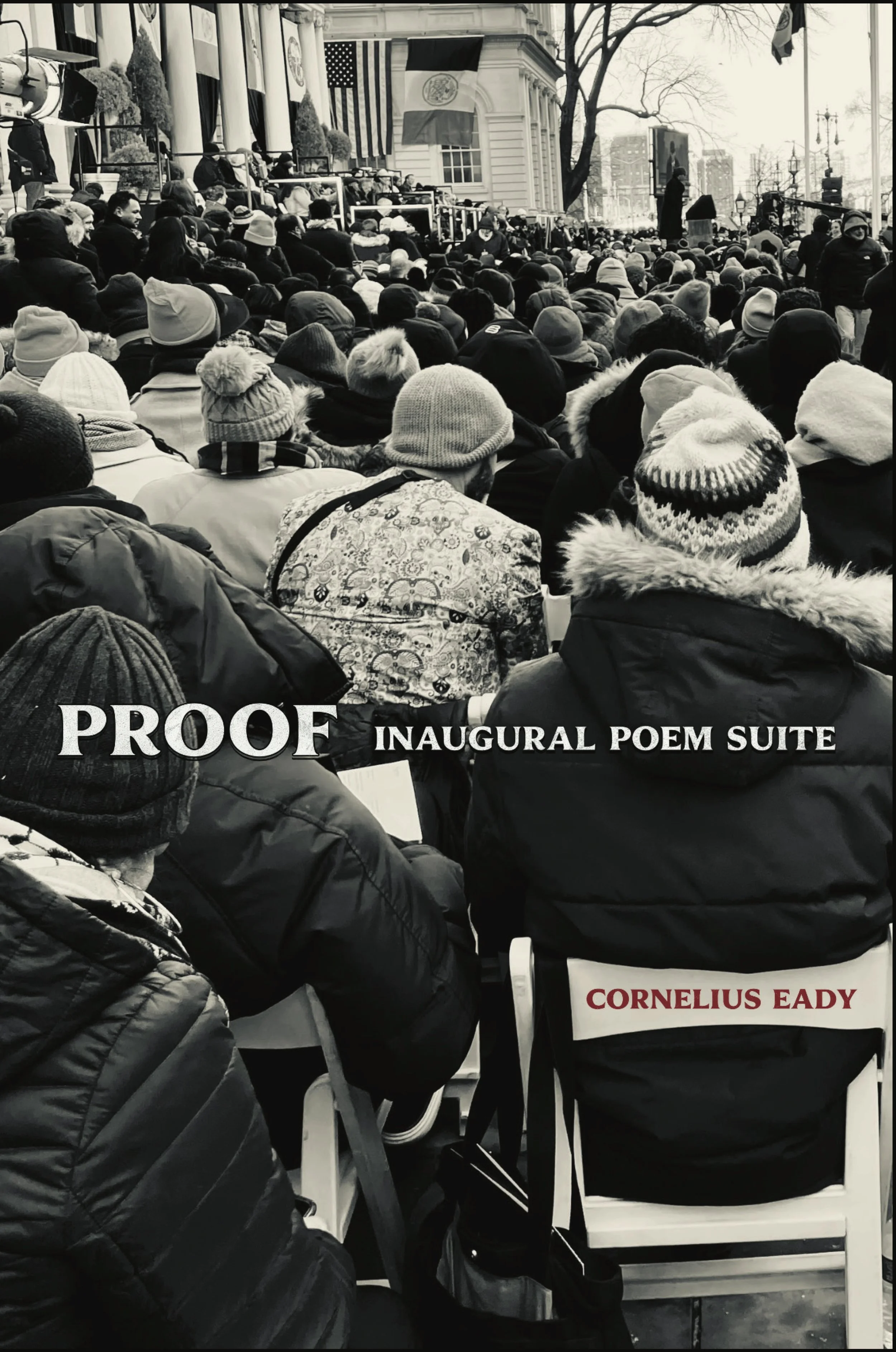
by Cornelius Eady
With a Foreword by Tyehimba Jess
Cornelius Eady turns the inaugural poem into an instrument of reckoning.
First delivered to mark the historic inauguration of New York City’s mayor Zohran Mamdani on January 1, 2026, the title poem is not ceremony—it is a summons. “You have to imagine it,” Eady insists, and from that insistence rises a chorus: those called too dark, too queer, too poor, too loud; those renamed invisible; those told “not now.” What if joy could wear down the rock of no? What if imagination were not escape, but evidence?
Moving from Robert Frost squinting into winter glare, to Elizabeth Alexander straightening her back before history, to Aretha Franklin beneath her church-crown hat, Eady braids civic pageantry with private memory. He summons the Colored Conventions of 1830, the 911 call that ricocheted through racial panic, the mock rifles on a Brooklyn rooftop, the “knife in sheep’s clothes.” Each poem widens the frame. Each poem refuses to look away.
Cornelius Eady
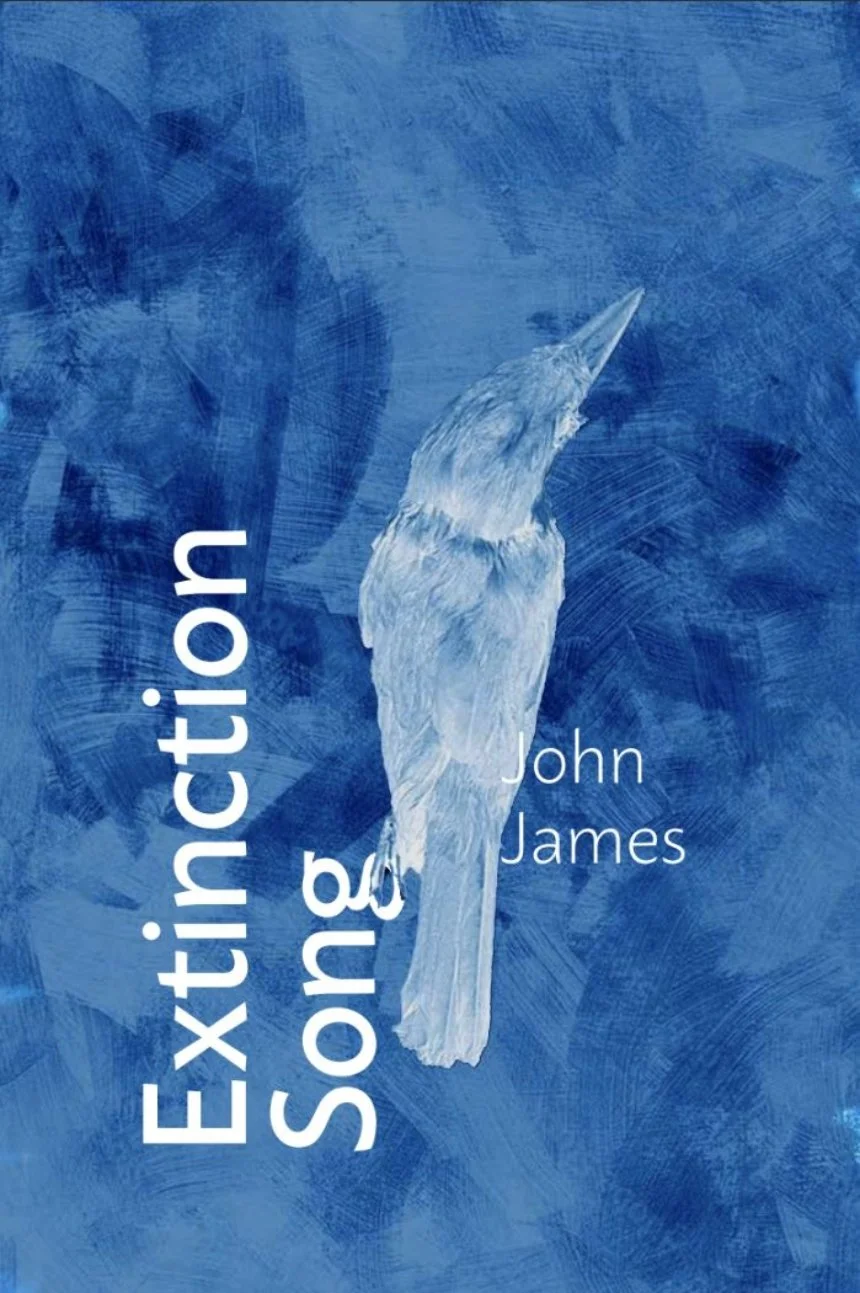
by John James
A collection that combines fixed poetic forms with long-form meditative lyrics to explore questions of agency in the Anthropocene.
Extinction Song begins with a tender depiction of early parenthood, as the speaker cradles his newborn son while imagining a dystopian climate future. The poems open into a broader consideration of overlapping and interrelated systems, from the confines of received knowledge to the closed circuit of ideology to the circularity of pollutive environmental cycles. Attentive to the levels of sound and of visual architecture, these poems highlight both destruction and unseen possibilities. By turns meditative and probing, and sometimes slyly funny, Extinction Song unwinds the perils and the joys of our precarious climate future.
John James
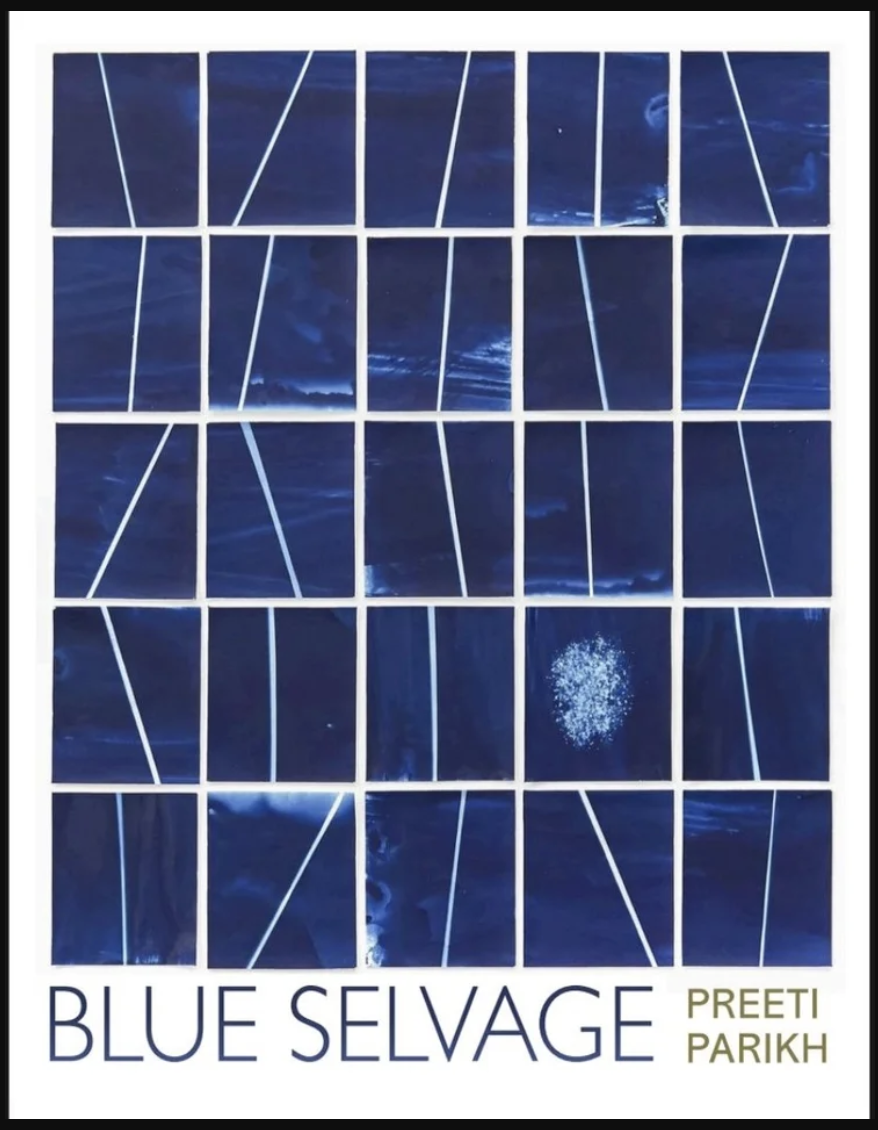
by Preeti Parikh
Blue Selvage reminds us that a revolutionary message often requires new forms of discourse.
The poems in Blue Selvage weave lyric, essay, documentary fragments, and historical reckoning into an exploration of skin, cloth, color, and form as living archives—where the gendered, racialized, and colonial histories inscribed on the body are continually exposed, resisted, and re-stitched through memory, touch, and language itself.
Preeti Parikh’s debut poetry collection is a mapping of boundaries, a (re)framing of fractured interiority, a text(ile) unfurling across shifting homelands. In this deeply embodied, formally daring meditation, the corpus is both archive and threshold, a site where “what’s felt becomes the body, what’s draped becomes form.” Here, passion for indigo, a medical-science informed perspective, fascination with the materiality of cloth and skin, and a journeying towards reclamation interlace with feminist inquiries and cultural examination to conceptualize the poems’ multivalent inhabitances.
Expansive in its rhetorical modes and landscapes, Blue Selvage is unified by a remarkable singularity of voice and vision through which Parikh skillfully invokes form as metaphor, performance, dramatization, and content. Throughout the book, recurrent vocabularies and silences—integument, selvage, gaze—operate as warp and weft, binding personal experience to collective striving, devotion, and survival. Meanwhile, on the page, multilingual textures and typographic openness resist closure, offering apertures for looking within and without. What emerges is a capacious field of attention, where intimacy and history press against one another, and where writing itself becomes an act of unstitching and re-making—an ethical, sensuous practice of staying with what the body remembers and what culture would prefer to erase.
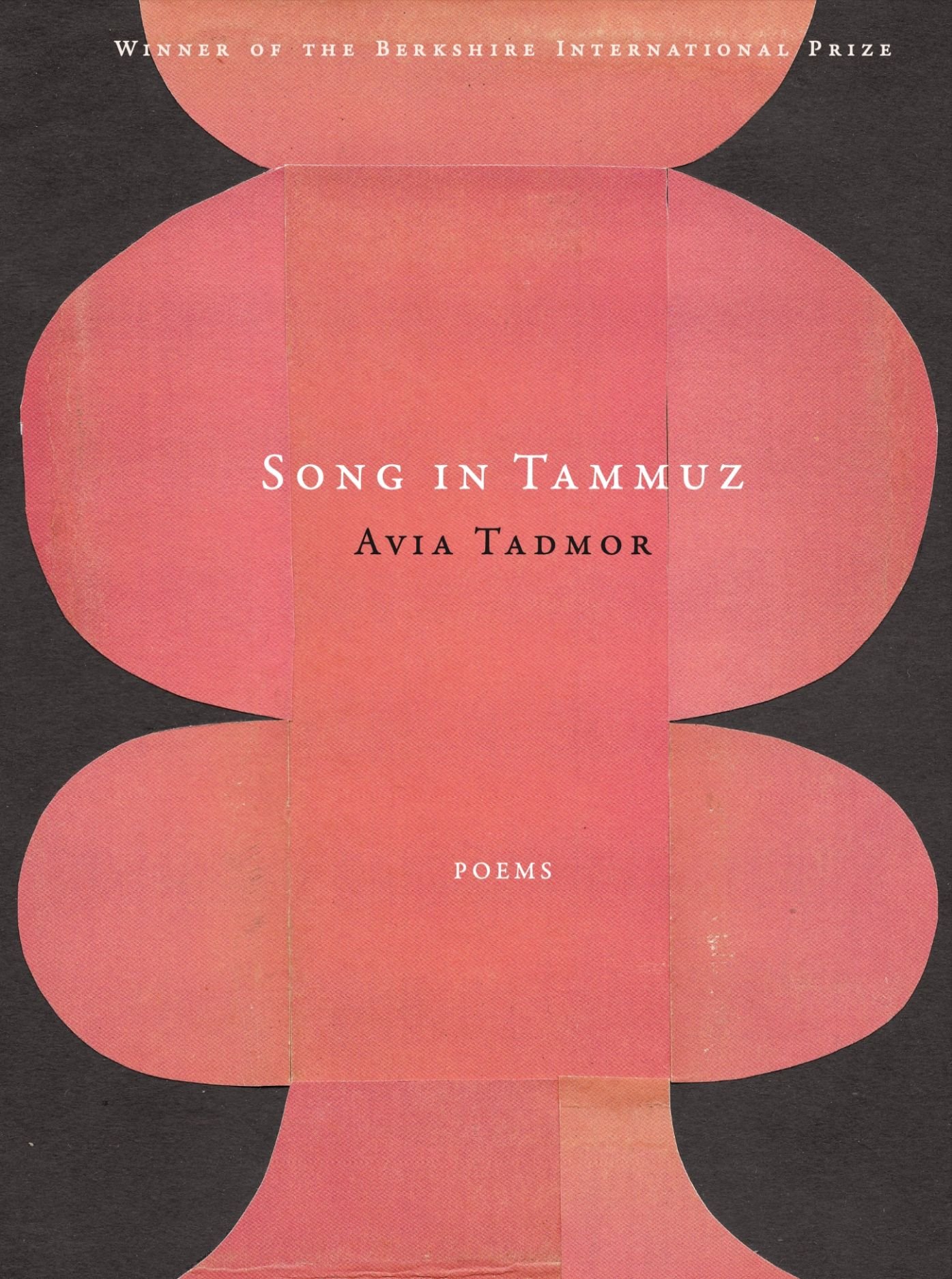
by Avia Tadmor
Winner of the International Berkshire Prize, this collection draws from an incredible range of literary forms, from familiar couplets and tercets to footnotes, dictionary definitions, and luminous lyric fragments.
While stylistically daring, even virtuosic, Avia Tadmor’s stunning debut is unified by its enduring engagement with questions of language and alterity. What does it mean to be othered by and through language? What happens when grammar, syntax, and the concepts of identity housed within them are at odds? Does a revolutionary message demand new forms of discourse? “I can say it through the distance of this other tongue,” Tadmor writes.
Indeed, she considers the role of language—from conceptual framework to vast storehouse of history, culture, and inheritance—in shaping the self, ultimately revealing our agency within a grammar and syntax we did not choose. As Tadmor writes, “Her pen is a stronghold, a lighthouse / flickering late in July.”
Avia Tadmor
Preeti Parikh
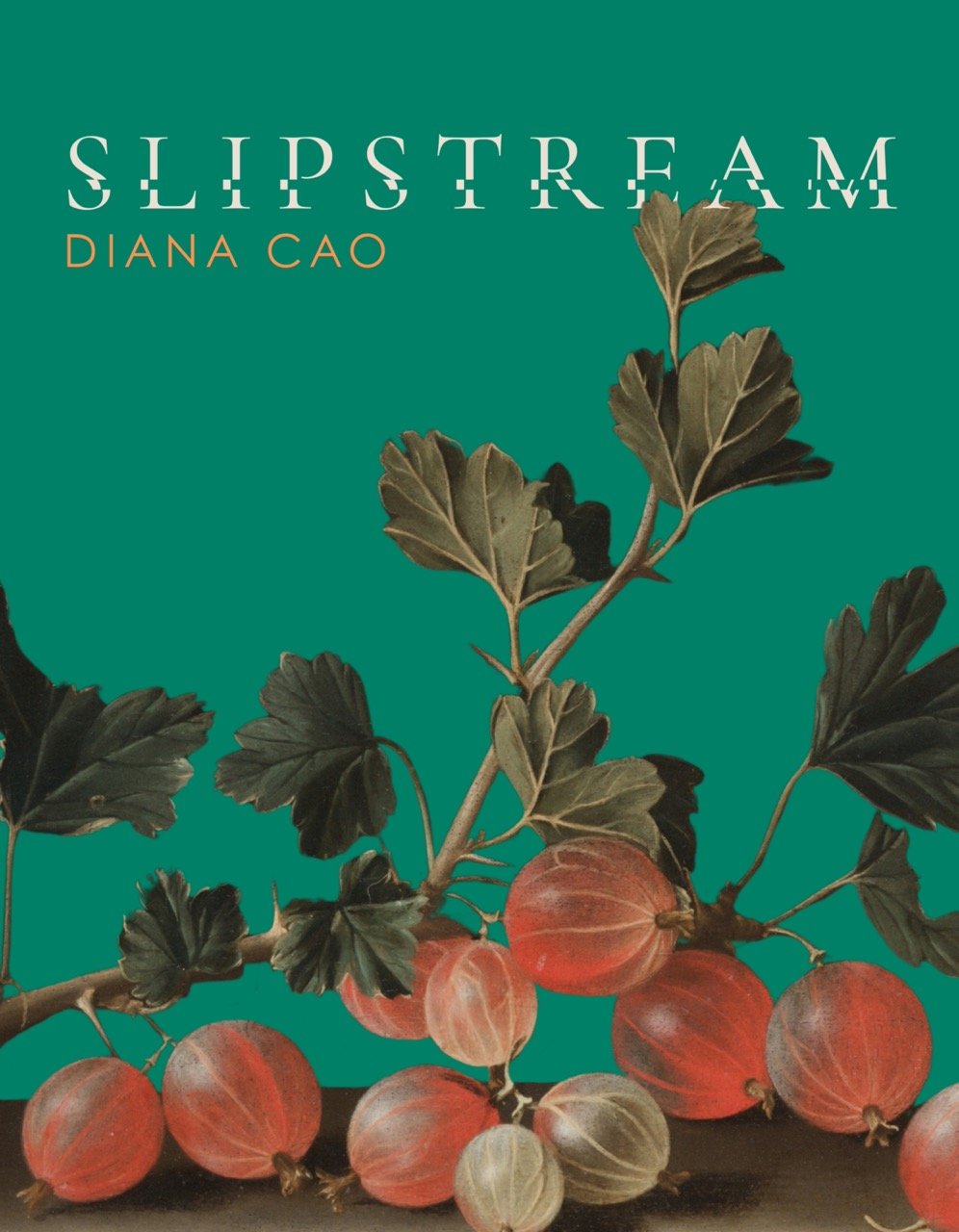
by Diana Cao
Slipstream is a bracing, intimate, and formally adventurous debut that moves with equal grace through personal memory, inherited history, myth, and the ambient technologies of contemporary life. Diana Cao’s poems braid ancient Chinese legend, family migration, illness, love, and grief with moon landers, algorithms, privacy policies, and online ritual, creating a lyric field where the ancestral and the digital speak fluently to one another. The book is formally restless and assured. Sonnets, sestinas, villanelles, fables, and linked sequences feel conversational rather than ornate, their intelligence worn lightly, their music precise and unforced. Throughout, Cao writes with a clarity that never flattens complexity: humor and vulnerability coexist with philosophical rigor; tenderness is sharpened, not softened, by attention to politics, history, and care. What emerges is a voice attuned to relational life in all its registers—daughterhood, friendship, desire, citizenship, species— asking how to live, love, and remain lucid inside systems that both sustain and estrange us. Slipstream is a book of uncommon range and emotional intelligence, one that feels fully of this moment while remaining in deep, living conversation with the past.
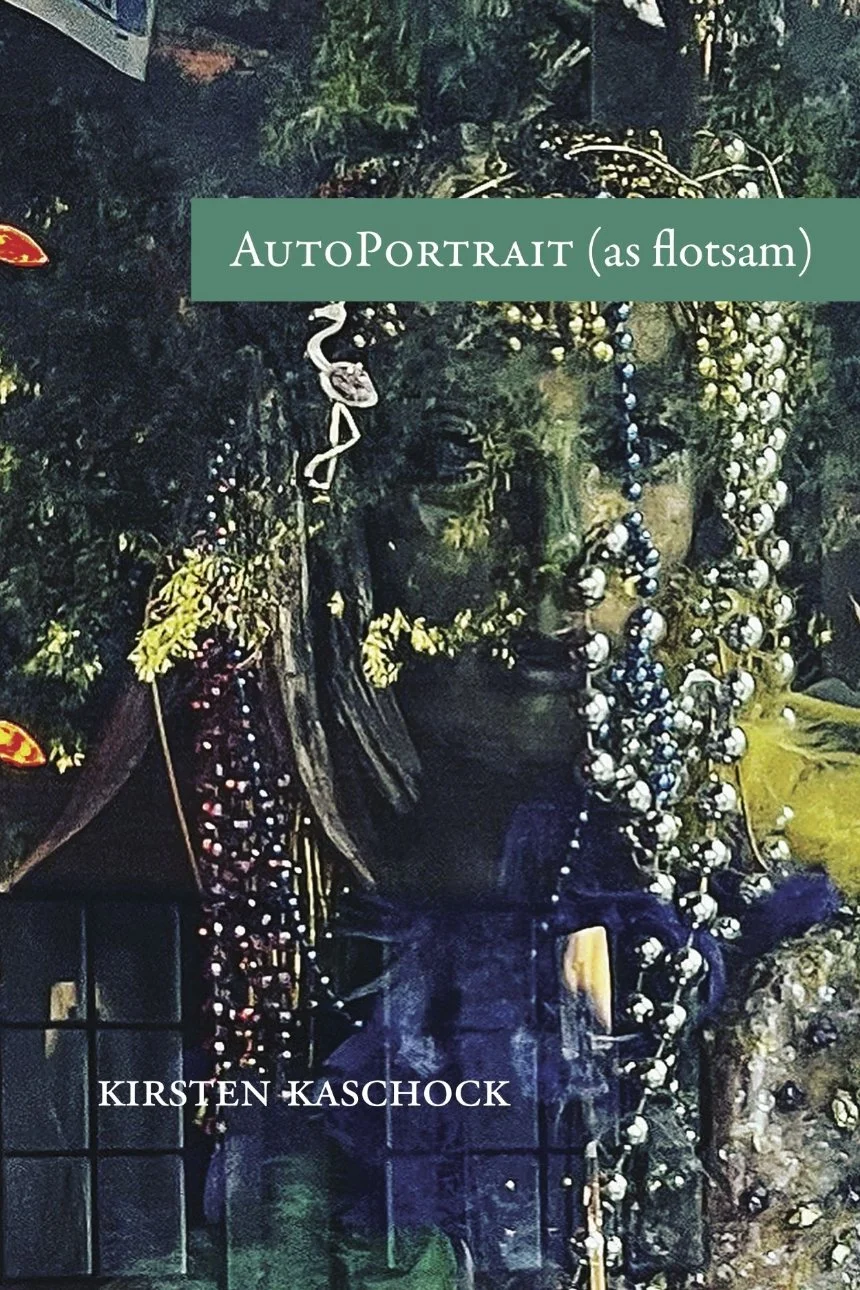
by Kirsten Kaschock
An investigation of identity as prompted by art and artists.
In AutoPortrait (as flotsam), Kirsten Kaschock uses the words, lives, and images of other artists as springboards into the self. Arranged almost as a gallery walk, AutoPortrait alternates between masque-like encounters with art and reflective passages engaging memory and desire. Influenced by photographers Francesca Woodman and Cindy Sherman, Kaschock walks a tightrope between vulnerability and artifice—using lines and shapes provided by the many artists referenced here (painters, musicians, and poets) to sketch an impression of a woman artist.
The struggle she chronicles is familiar to any storyteller: an effort to piece together minor episodes to create some semblance of a whole. The question is whether such a project can ever be accomplished. Can the fragments gathered on the shore of memory be tied together, brought to life? Other artists, perhaps especially the abstract expressionists, serve her as both guide and glue. The result is an intimate travelogue—the poet’s own narrow road to an interior where she finds a meditative balance between rage and regret, sorrow and joy.
Kirsten Kaschok
Diana Cao
Edited by Naoko Fujimoto
A collection of translated Japanese waka-poems, including text collage and haibun-style discourses on translation.
Of Women is a collection of translations of Japanese waka-poems from the seventh century to the twelfth century, featuring twenty female poets from this period, when Japanese women’s literature flourished. This book includes poems by famous writers from the era, such as Sei Shonagon (The Pillow Book) and Murasaki Shikibu (The Tale of Genji), and introduces some lesser-known female poets as well.
Waka compacts much information in a short form: words with double meanings, unfamiliar phrases, habits foreign to non-Japanese speakers, and hidden historical backgrounds. Direct translations would fail to capture the author’s full intent, so Of Women takes several approaches to capture the original sensory images, including text collage and haibun, short essays that provide historical context and introduce the author before each waka.
celebrating
women in translation
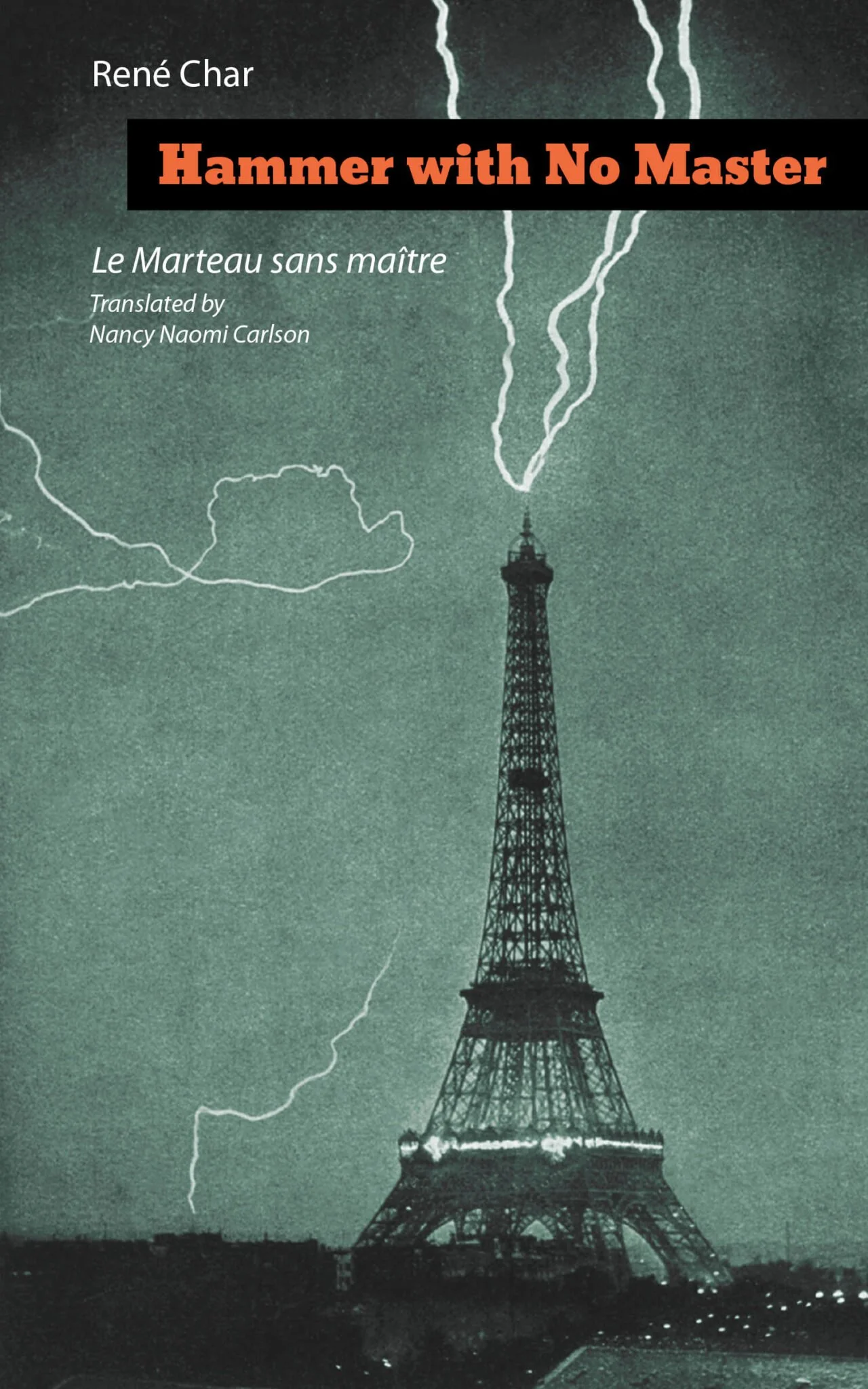
by René Char, translated by by Nancy Naomi Carlson
In his foreword to Stone Lyre, Nancy Naomi Carlson’s previous collection of René Char translations, Ilya Kaminsky praised “the intensity, the dream-like language, the gravity of tone, and the constant impression that one is reading not words in the language, but sparks of flames.”
Stone Lyre was a selection of poems from Char’s numerous volumes of poems; Carlson’s new Hammer with No Master is a discrete and continuous work, the first English translation of Char’s Le marteau sans maître, first published in 1934 — a time of rumbling menace that our time resembles.
translated by Nancy Naomi Carlsontranslated by Naoko Fujimoto
by Ilya Kaminsky, translated by Mariela Griffor
In 2004, a now legendary debut book of poems was chosen by Eleanor Wilner for the Dorset Press and released by Tupelo Press: Ilya Kaminsky’s symphonic and many-layered Dancing in Odessa, a book that earned its young author the American Academy of Arts and Letters’ Addison M. Metcalf Award and a Whiting Writer’s Award, and that drew accolades from some of America’s most discerning poets, including Anthony Hecht, Jane Hirshfield, Carolyn Forché, Robert Pinsky, and Adam Zagajewski.
Now, at a time when our country is becoming ever more multi-lingual, Tupelo Press is producing a Spanish-language edition of Kaminsky’s mesmerizing work. Bailando en Odesa has been translated by Chilean poet Mariela Griffor, working closely with the poet.
translated by Mariela Griffor
Marvels
A Literary Tarot Deck for Writing Inspiration
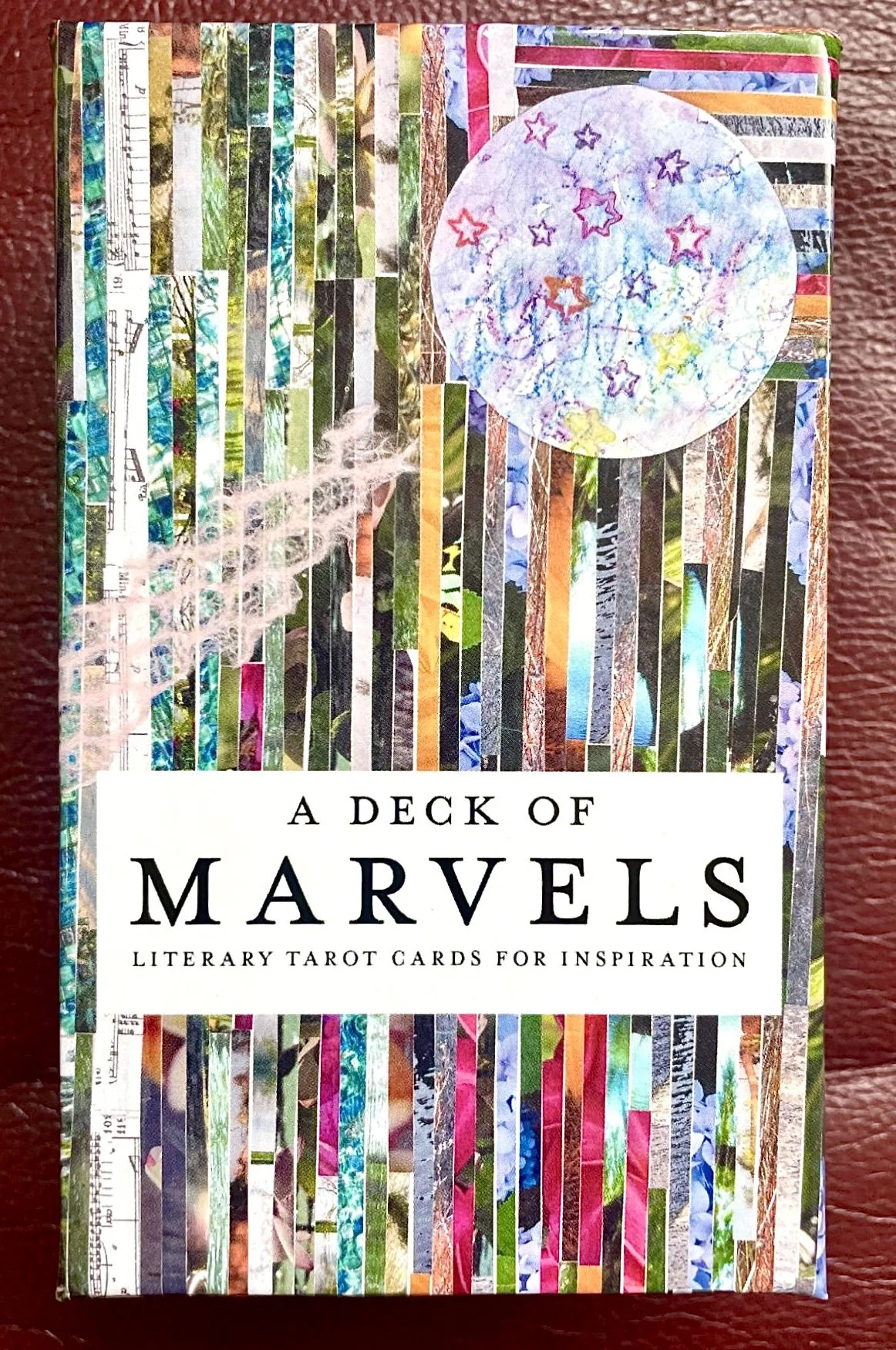
At your fingertips are all the creative energy from authors and their books from the library of twenty-three years of passionate publishing that is Tupelo Press! Sift through the visual and verbal gems excerpted from their covers and pages, let your eyes feast and your imagination spark! Whatever question or silence you bring to the deck, the deck will respond to, in verse and image. You have only to be open to the possibilities!
This exquisite, layered, 78-card tarot-size deck is a perfect instrument for poets and writers of all genres, creators, artists, and anyone who is looking for unusual and diverse visual and literary inspiration! Consider it an oracular opportunity to enliven your craft.
Please consider each card as a portal into the images and language of its corresponding book of poetry, including tantalizing poem excerpts and cover art from our beloved Tupelo collection.
We offer this guidebook to more deeply connect you with our authors and books. It lists card name, author, book title, publication year, poems the quotes come from, and to further animate the work, evocative words drawn from within each book.
Magic doesn’t follow rules, but we include suggestions for different card spreads so you can easily get started using this oracle deck. Shuffle the cards between your fingers and pull six cards from the deck, then use the associated six-card spread for your unique divination for crafting. Or, pull a card a day for writing or artistic prompts based on image, color, words and phrases. If you are so moved, each author would love for you to further explore their work!