
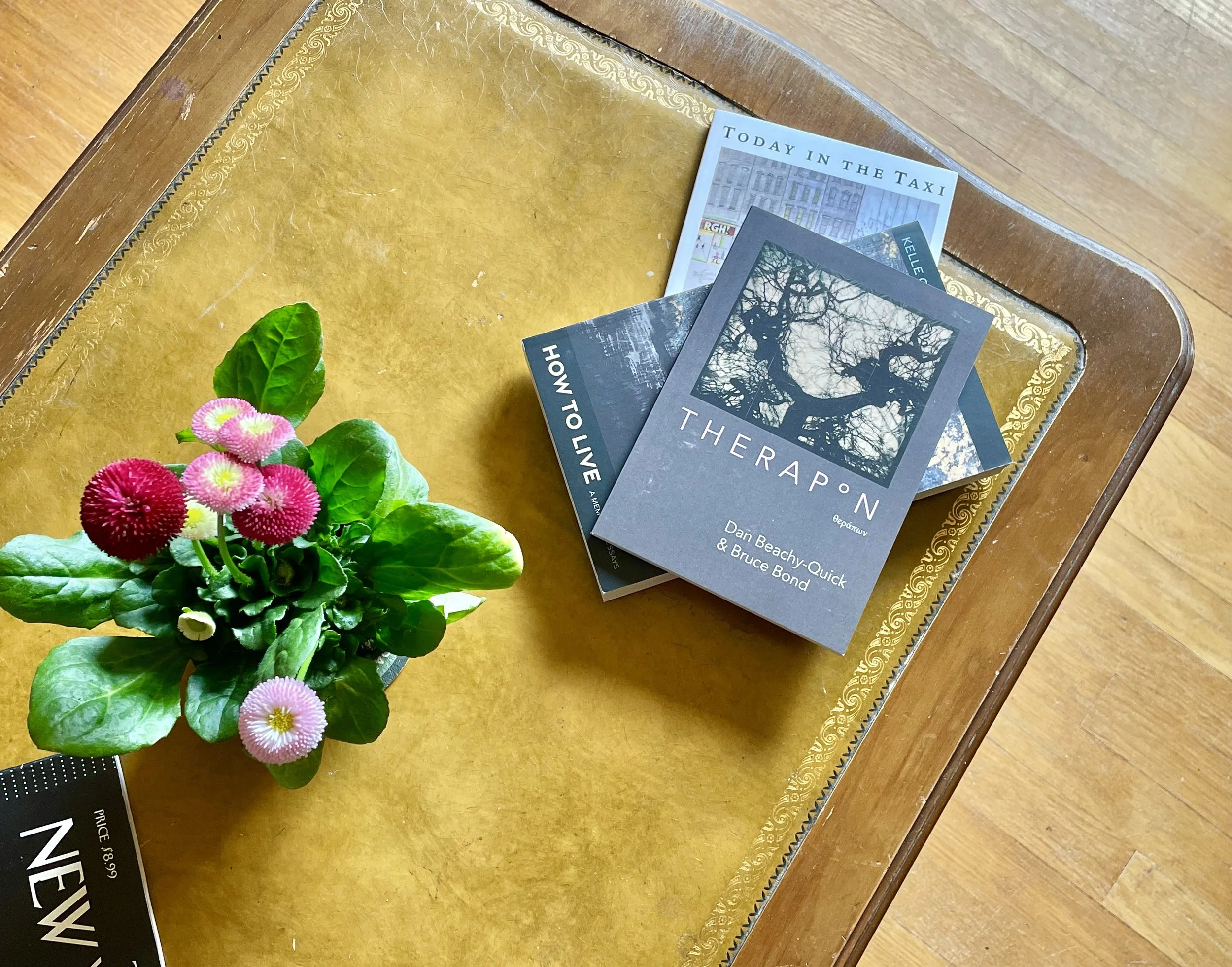
Become the next Tupelo Press author
It is important that you read the complete guidelines for each contest or reading period before submitting your work. Writers submitting work for consideration may be published authors or writers without previous book publications. Submissions are accepted from anyone writing in the English language, whether living in the United States or abroad.
Tupelo Press does not publish children’s books, inspirational books, graphic novels, or religious books. We do not accept emailed manuscripts for any contest, reading period, or submission opportunity.
Before submitting an entry to Tupelo Press, please explore the work of the writers we have published. We’re drawn to technical virtuosity combined with abundant imagination; memorable, vivid imagery and strikingly musical approaches to language; willingness to take risks; and an ability to convey penetrating insights into human experience.
Contests & Prizes
-
The Berkshire Prize for Poetry
Submission period: January 1st – April 30th
-

The Snowbound Chapbook Award
Submission period: December 1st – February 28th
-

The Summer Open Reading Period
Submission Period: July 1st - August 31st
-
The Helena Whitehill Book Award
Submission Period: August 15th — October 31st
-

The Dorset Prize for Poetry
Submission period: October 1st – December 31st
-
Translations
Submission period: Ongoing
-
Non-Fiction
Submission Period: Ongoing
-
Fiction
Submission Period: Ongoing
about the submission process
-
-
We do not accept previously self-published collections. However, individual poems that have appeared in other journal publications are accepted within a new manuscript -with the proper acknowledgments!
-
All of our currently open contests, prizes, and open submission periods are available on our Subfolio page.
-
Yes! In fact, here’s what Kristina Marie Darling, Editor-in-Chief of Tupelo Press and Tupelo Quarterly, has to say about resubmissions:
"As Editor-in-Chief of Tupelo Press, I’m often asked whether writers should resubmit to contests if they weren’t chosen as winner in the prior year. I’m here today to speak about the value of persistence. Many of our contest winners at Tupelo Press would have never been selected for their respective prizes if they had given up after a single submission We’ve seen talented writers win the Dorset Prize after their seventh or eighth manuscript submission, and we’ve made offers of publication to writers sending the same project to us for the second or third time. One of the great pleasures of being an editor is this: having the privilege of seeing working writers hone their craft, and watching a promising manuscript take shape before our eyes over the course of several submissions. And of course, I should mention that our preliminary judges and final judges rotate with each new submission opportunity. We have seen a change in judges or screeners result in more pleasing outcomes for those whose work may not have been fully appreciated the first time, and this is part of the value of and reasoning behind our process. As always, we look forward to reading your manuscript."
Most of our books were selected through contests, prizes, and open submission periods.
Take a look at some of the titles published through our submission processes
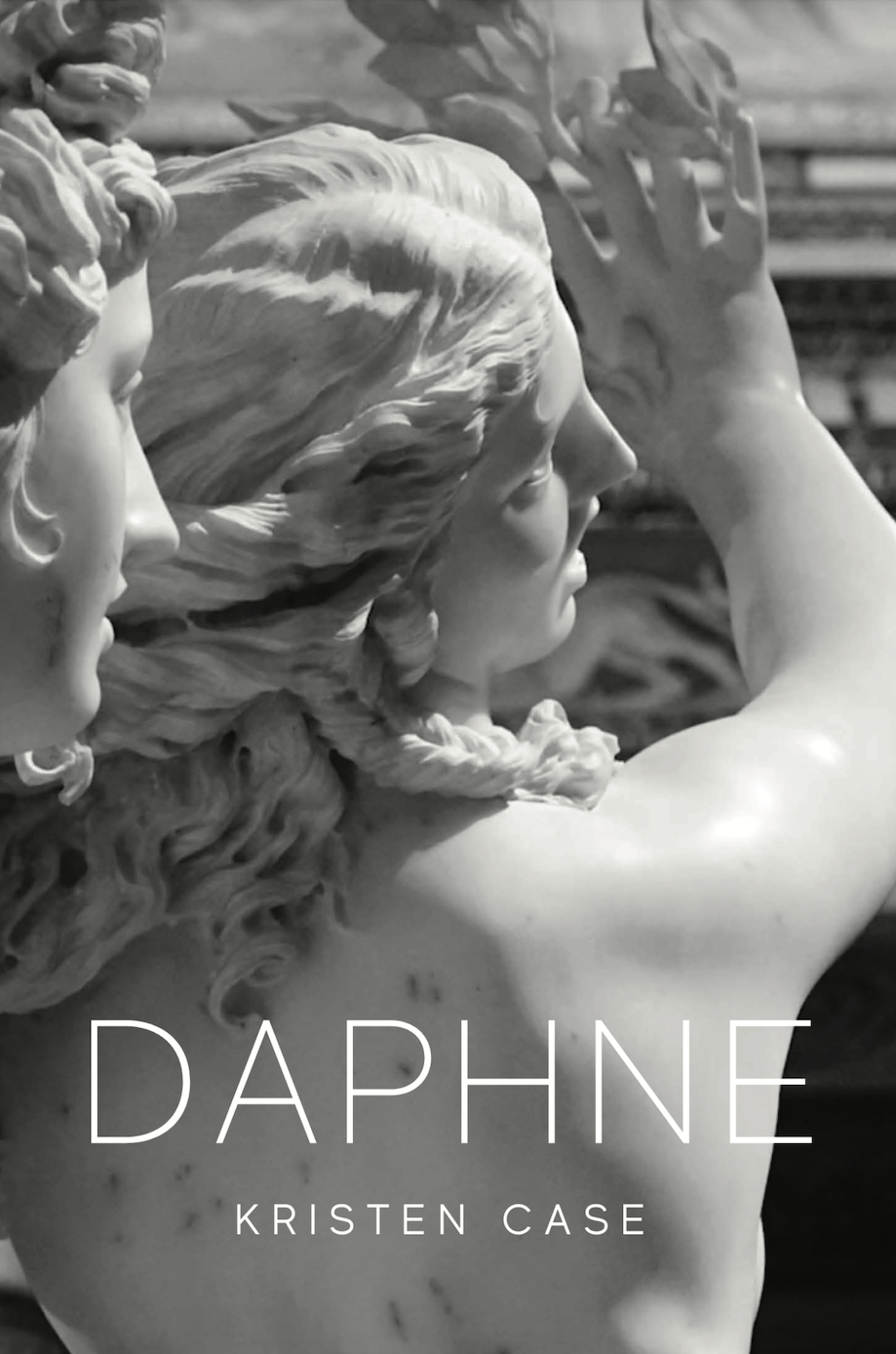
by Kristen Case
Daphne is a meditation on the centrality of predation to the Western lyric tradition. The book is punctuated by lyric essays which circle obsessively around questions of what knowing is, what is possible to know with certainty, and whether it is possible to know another person. The poems and lyric essays in this collection are in dialogue with poems about Ovid’s Metamorphoses, Shakespeare’s Hamlet, and Wyatt’s sonnet “Whoso List to Hunt.” Taken together, these works interrogate the ways violence both disrupts and enables our ways of knowing one another, placed in counterpoint to a recurring refrain signalling the possibility of a non-predatory desire.
Kristen Case’s Daphne explores the relationship between predation and the lyric, particularly within the Western canon. But to say that Case merely offers a provocative and conceptually arresting artistic intervention would be to greatly underestimate her powers as a writer. Case elaborates, “The story goes like this: a girl/woman is chased after and lost. She becomes a lost thing. The man becomes a poet.” As Case unearths the gender politics and power structures of the literary tradition she inhabits, she does not merely critique or gesture at problems, but instead, works toward more just and equitable forms of discourse. By challenging the boundaries between literary criticism, prose poetry, hybrid forms, manifesto, and the lyric, Case ultimately works within received literary forms to expand what is possible within them. “How you may forfeit your own mind, may stand seized of it, by poison, or by illness or by any man, by words,” she warns. And in turn, she responds with a powerful decolonization of the imagination.— The Editors
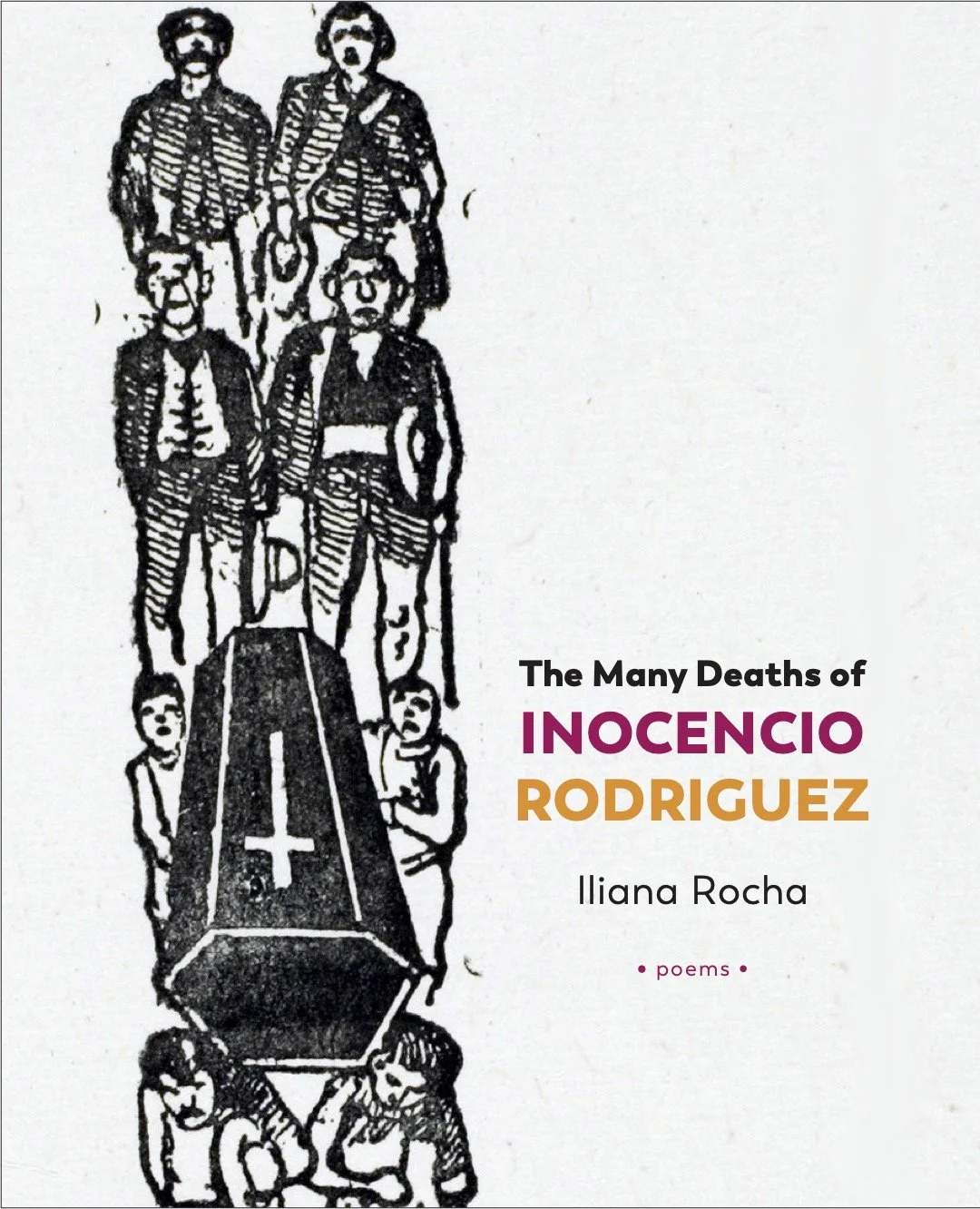
by Iliana Rocha
The Many Deaths of Inocencio Rodriguez chronicles an obsession with the 1971 unsolved murder of Rocha’s grandfather while interrogating the true crime genre, tabloid culture, immigrant identity, the phenomena of missing and murdered women, troubled relationships with law enforcement, and the intersection of prose and poetry. Because the details of his death were (and are) terribly unclear, part of how the family reconstructed him was to share the different accounts heard over the decades, and this collection attempts to pin down these shifts and contours through destabilizing form and genre. Each speaker reconfigures a past mysterious and tenuous, clouded by distance, language, and time in order to demonstrate how Inocencio Rodriguez defies a single narrative.
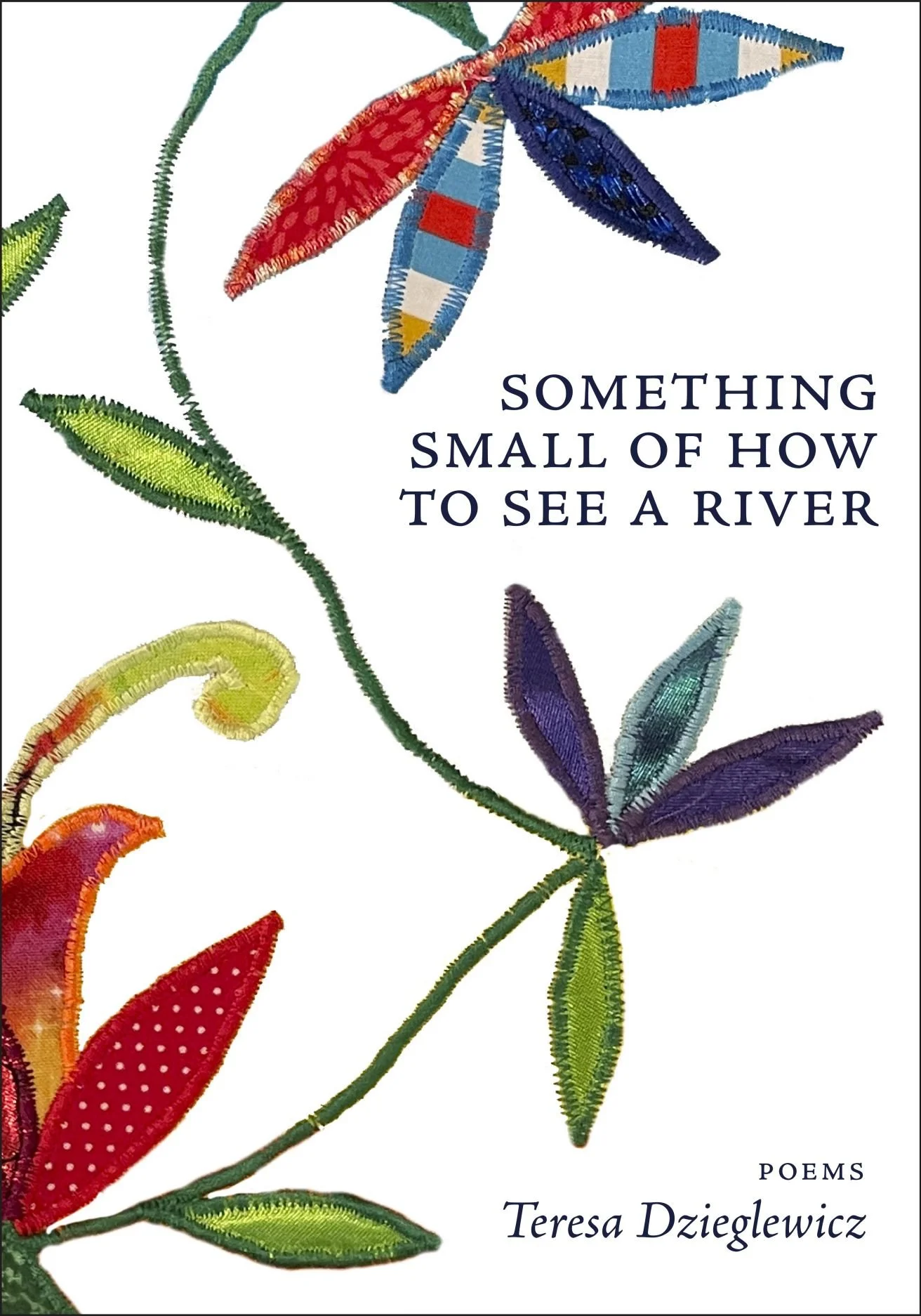
by Teresa Dzieglewicz
Through the weaving of documentary poetics, first-hand accounts, dialogue, and lyric, these poems tell the story of co-running a school at the Ocethi Sakowin Camp at Standing Rock.
Something Small of How to See a River interrogates the idea of narrative. Who gets to tell a story and what does it mean when the official story, the story told by the governor, the police, or the local media, is a fundamentally dishonest one? The poems collected here meditate on failure: how systems fail us and our environment, how whiteness fails to hold itself accountable, how future generations and the land are being failed—and how, in the face of all this, the Standing Rock movement was not a failure. At the heart of this collection is the strength, care, and radical joy of the movement, which shines through and against the violence.
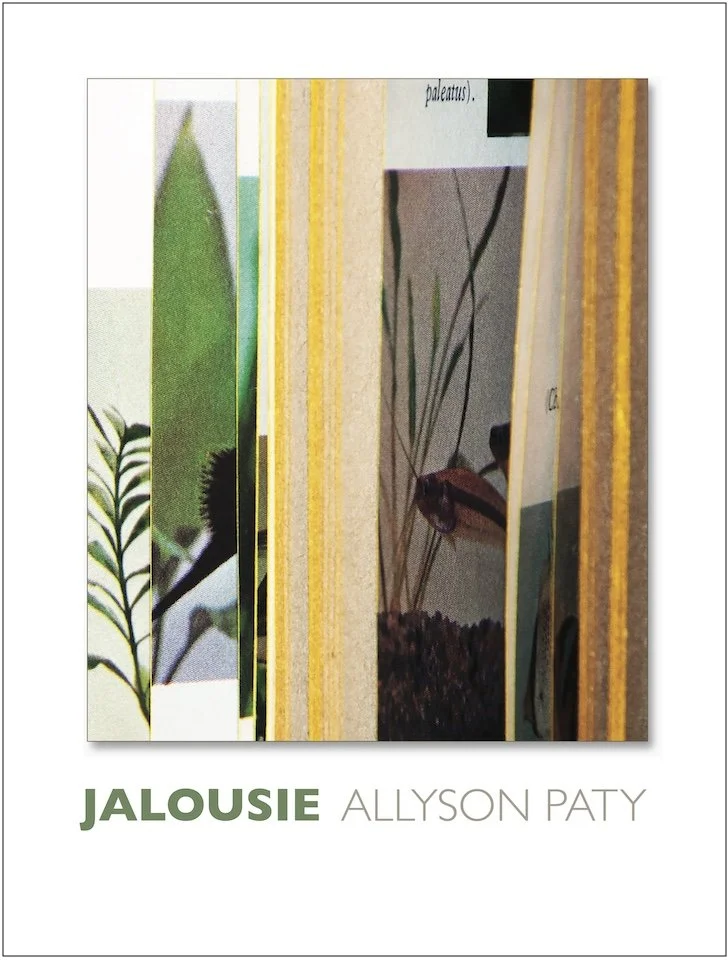
by Allyson Paty
The “I-centered,” first person, yet experimental poems in Jalousie explore the ways in which expression of the deeply personal experience is both dictated to and altered by rigid societal expectations. The speaker of these highly personal poems can’t help but view language as a historical artifact, the DNA of past worlds, as these poems delve into the complexities of sorting out one’s individual identity amid broader cultural contexts. Paty’s poems attempt to connect the personal, private, intimate persona with elements that are always external—external not only to this poet but to every person.
These poems seek to capture fleeting moments of personal connection despite the impossibility of language, the societal dictates of gender roles, the pressures of making a living, the inexorable march of time, and the bewildering strangeness of architectural spaces. At the heart of this collection is “Premise,” an extensive poem that weaves in detours through the history of New York City, themes of discard, references to Bruegel’s “Wedding Dance,” and discussions on representation and memory. The book also contains three full-color illustrations which augment the poet’s themes and concerns.